

First Lecture on Public Legal Education Aids Overseas Expansion: Partner Jian GUAN Interprets Strategies for Dealing with Tariff Barriers on
Currently, with frequent international economic and trade frictions, tariff barriers and various derivative restrictive measures continue to pose challenges to the international operations of Chinese enterprises. Recently, Dr.Jian GUAN from BeijingGrandwin Law Firm was invited as a guest on the first episode of the "CCPIT Legal Talks" public legal education program. With the theme "How to Deal with Tariff Barriers," he delivered a public interest lecture, providing foreign trade enterprises with precise legal guidance to avoid pitfalls from dimensions such as industrial chain relocation, investment destination selection, and risk prevention.
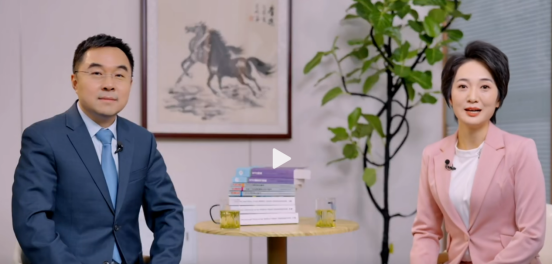
During the program, Partner Jian GUAN focused on the common practice of enterprises "changing the origin of products by relocating industrial chains to circumvent tariffs," delving into the key factors for consideration. He pointed out that faced with high anti-dumping duties, countervailing duties, US Section 301/232 tariffs, and the risk of the US threatening to impose a 60% tariff on Chinese products, many Chinese enterprises choose to relocate their industrial chains overseas. However, the choice of investment destination needs to consider multiple conditions and should not be blindly followed.
Regarding the popular relocation destinations favored by enterprises, Partner Jian GUAN analyzed the pros and cons one by one and highlighted risks. Concerning Mexico, he stated that leveraging its Free Trade Agreement with the US offers the advantage of zero tariffs for products exported to the US, making it a top choice for many enterprises. However, potential uncertainties require vigilance – Trump has threatened to impose a 25% tariff on Mexico after taking office, and the USMCA Free Trade Agreement will enter a review period in 2026, so the risk of policy changes cannot be ignored. Regarding Vietnam, which has been popular in the past two years, Partner Jian GUAN reminded that although its geographical location, labor costs, and preferential policies are attractive, because the EU and US do not recognize its market economy status, Chinese-invested enterprises there are still susceptible to high anti-dumping and countervailing duties. In contrast, countries like Thailand and Malaysia, which are recognized by the EU and US as having market economy status, make it easier for Chinese-invested enterprises to achieve favorable outcomes when facing related investigations, making them more stable alternative options.
Besides selecting investment destinations, Partner Jian GUAN also highlighted two major implicit risks: anti-circumvention investigations and transnational subsidy investigations. He emphasized that some enterprises, after shipping Chinese-made components overseas for simple assembly before exporting to Europe and America, may still face investigations under stringent EU and US anti-circumvention rules, even if they obtain local Certificates of Origin. Such rules typically have clear requirements regarding the proportion of Chinese components and the local value-added rate (e.g., component proportion not exceeding 60%, value-added rate exceeding 25% of manufacturing cost, etc.). The risk of transnational subsidy investigations is equally noteworthy. Even if circumvention is not established, enterprises extensively using Chinese raw materials or receiving loans from Chinese-invested banks may become targets for investigation by the EU and US. Currently, the US is conducting such investigations on photovoltaic products from four Southeast Asian countries, and the EU has previously initiated investigations against Chinese enterprises in overseas industrial parks under the Belt and Road Initiative. The number of related cases is likely to continue increasing in the future.
Partner Jian GUAN suggested that if enterprises need to go overseas due to tariff restrictions, they must comprehensively consider the Free Trade Agreements corresponding to target markets and the market economy status of investment destinations. Simultaneously, they should plan supply chain and capital chain arrangements in advance, strictly avoid the red lines of anti-circumvention and transnational subsidy investigations, and carefully choose investment destinations.
This public legal education lecture precisely addressed the pain points of enterprises expanding overseas, with highly practical content providing clear decision-making ideas for foreign trade enterprises facing tariff barriers. As the opening piece of the "CCPIT Legal Talks" series on "Enterprise Responses to Economic and Trade Restrictive Measures," Partner Jian GUAN's sharing laid the foundation for the subsequent two episodes and demonstrated BeijingGrandwin Law Firm's social responsibility in practicing public legal education and assisting enterprises in high-quality overseas expansion.

 京公网安备11010502059279号